
Find People Across Layton Records
A good Layton people search follows the fact already known. A full name works in Utah Courts Xchange, the state license database, business filings, and some public staff directories. An address works best in Davis County Property Search. A parcel serial can then join the map, tax notice, assessment, and recorder history. For a past resident, the Davis County Clipper, census schedules, probate files, and recorder books often reach farther than a current web directory.
Layton is not the county seat. Most deeds, ownership plats, marriage licenses, voter administration, and county records requests lead to Farmington. City Hall remains the right place for Layton permits, city business licenses, police records, municipal meetings, and cemetery-related files. Choosing the keeper first prevents a broad request from landing at an office that never held the record.
Vote.Utah is an identity-matched status tool, not an unrestricted name browser. The separate Layton voter registration lookup explains the public file and its protected fields.
- Write down the full name, name variants, place, and time period. Middle initials and former names help separate similar people.
- Search the official source suited to the starting fact. Use property records for an address, Xchange for a court party, and licensed directories for a public role.
- Capture a stable identifier such as a parcel serial, document entry number, case number, license number, or exact event date.
- Confirm the match in a second record. Compare dates, addresses, party roles, relatives, or legal descriptions rather than trusting a name alone.
- Move to the counter, clerk, library, or Archives when the online record ends. Ask for a named record series and a narrow date span.
Layton People Search Offices
Three counters divide the main Layton records trail. The Davis County Recorder connects names to deeds, mortgages, liens, plats, and parcel ownership. The County Clerk manages marriage licensing, voter records, election material, commission records, and county GRAMA coordination. The Layton City Recorder handles city-created records and directs municipal requests through Utah's Open Records Portal. Detailed access classes and request rules belong with Layton public records.
Davis County Clerk
61 South Main Street
Farmington, UT 84025
801-451-3213
Layton City Recorder
437 North Wasatch Drive
Layton, UT 84041
801-336-3800
Search Layton Property by Address
Davis County Property Search 2.0 is the strongest free address route. Enter a street address or property-tax ID, choose the mapped match, and open View Parcel Detail. The result can show the owner or addressee, mailing and property addresses, parcel serial, legal description, acreage, assessed values, tax data, and linked recorder evidence. It is an information system, not a certified title report.
The official Davis County property map shows the address-led interface used for Layton searches.
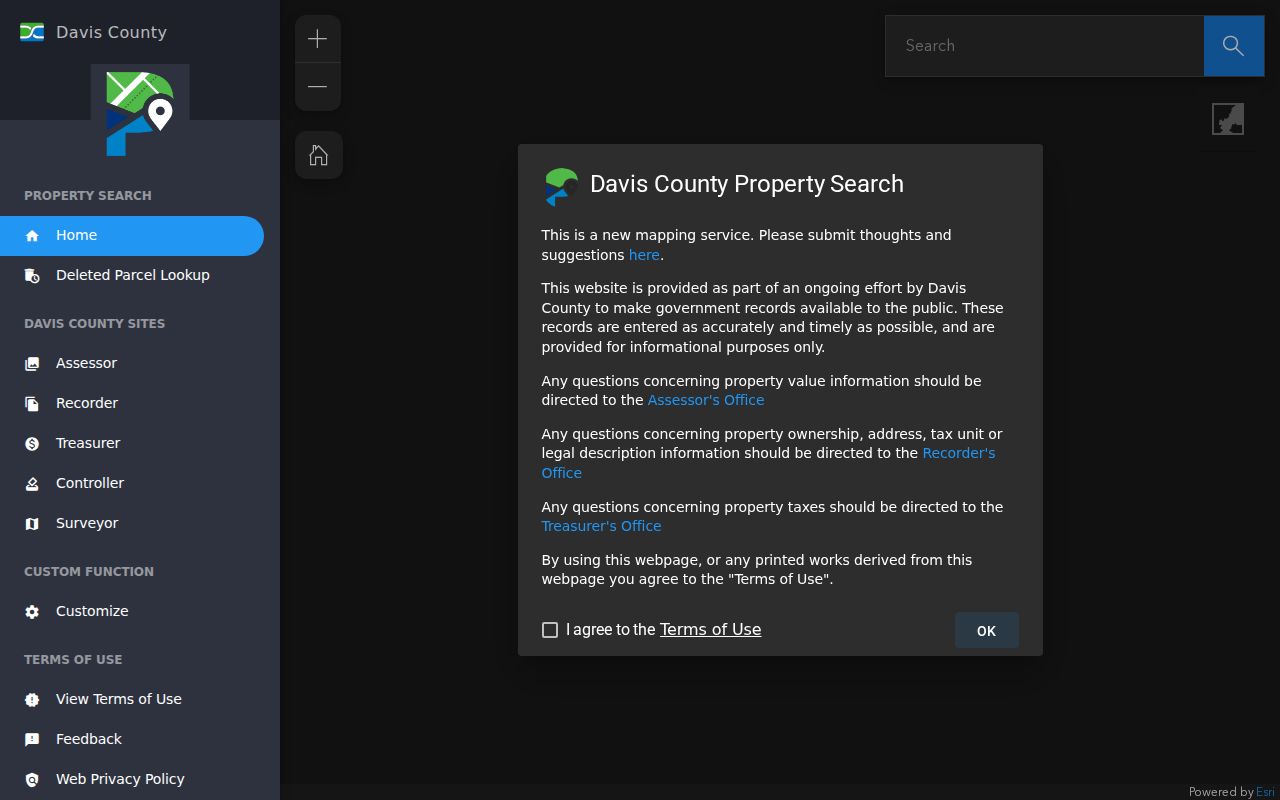
The captured map makes the key distinction clear: the free path begins with a place or serial. REDI-Web, the recorder's paid service, expressly adds broad owner-name and document-number searching.
| Search control | Best input | Result value |
|---|---|---|
| Search box | Street address | Mapped parcel match |
| Property tax ID | Parcel serial such as 09-048-0051 | Stable county record key |
| Document entry | Known recorder entry number | Recorded-document association |
| View Parcel Detail | Selected map feature | Ownership, tax, and legal facts |
Note: Preserve every N, S, E, or W in a Layton street address because the local grid can place the same number on different segments.
Read Layton Address Records Correctly
A county tax notice may show two addresses that answer different questions. The situs address is the land's physical location. The owner mailing address receives tax notices and may belong to a trustee, business, or non-occupant owner. A different mailing address can help locate a person, but it does not prove the person lives there. The parcel serial is safer than either address for joining county systems.
Legal descriptions also matter. Older Layton deeds may describe a lot and block, a subdivision, or a section-township-range location rather than a modern street. Follow that text to the recorded plat and GIS boundary. Hill Air Force Base, nearby cities, and unincorporated land can also produce a Layton postal label even when Layton City is not the permit keeper.
- Situs address
- The parcel's physical location.
- Mailing address
- The destination for owner tax correspondence.
- Parcel serial
- The county key joining map, assessment, tax, and recorder data.
- Legal description
- The land description that remains useful when street labels change.
Trace Names in Layton Deeds
Once a parcel is known, recorder documents can carry the search backward or forward. A deed names the grantor, who transfers an interest, and the grantee, who receives it. Mortgages and trust deeds connect borrowers and lenders. Liens and judgments may connect another party to the land. Entry numbers and legal descriptions help prove that two records concern the same parcel.
The free map is not an unrestricted surname index. REDI-Web costs $25 per month and advertises searches by name, address, parcel, and document number, plus abstracts and scanned images. Public terminals and historical books at the Farmington recorder counter are the offline route. The office notes books beginning in 1870, but it does not publish one exact start year for every online class. Staff can help locate a record, though they do not perform title searches.
Useful pivot. A parcel serial survives spelling changes better than a street address and should be saved with every copied deed or tax notice.
Search Layton Court Party Records
Utah Courts Xchange indexes public district and justice cases by party. A Layton search can be narrowed to Davis County, a court, case type, date range, or judgment-only results. An asterisk after a first name can catch variants and middle initials. Search results show the court, case type, number, filing date, party name and role, and a case history when public. Common names can return up to the system's 500-result cap, so time and court filters matter.
The Utah Xchange entry screen is the statewide starting point for Layton court name searches.
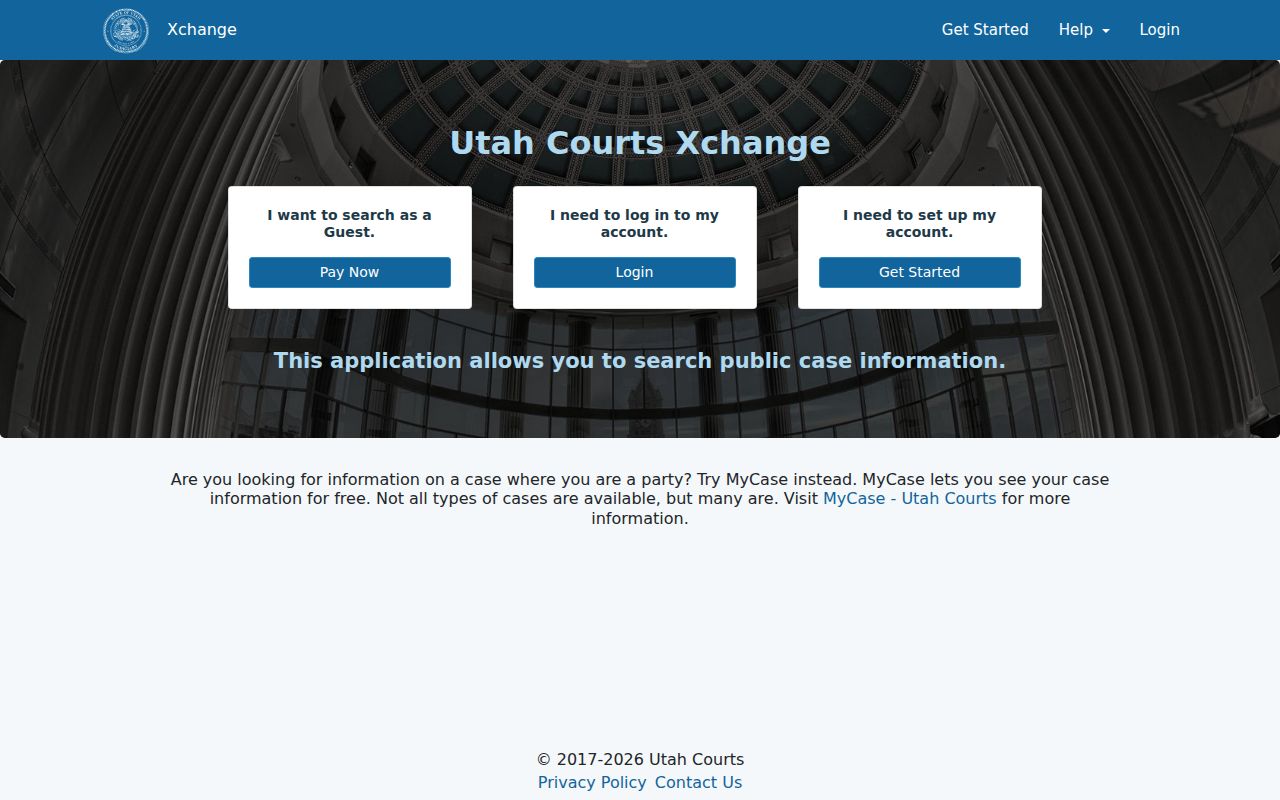
Online access is paid, while most district courthouses and the Utah State Law Library provide free public Xchange terminals. A public docket does not make every filing public. Sealed, expunged, juvenile, adoption, and civil-commitment matters are excluded, and many domestic filings remain private even when orders or docket events are visible.
| Court | Covers | Name Search | Access |
|---|---|---|---|
| Second District Court | Civil, probate, divorce, felony, Class A cases | Xchange | Paid web or free courthouse terminal |
| Layton Justice Court | Most Class B/C, traffic, infractions, small claims | Xchange | Paid web, terminal, or clerk |
| District of Utah | Federal cases | PACER | Federal online account or clerk |
Access Layton Vital Records
Layton does not keep a separate public certificate index. The Davis County Health Department can serve local in-person requests, while the Utah Office of Vital Records and Statistics issues state birth, death, marriage, and divorce certificates. The Davis County Clerk handles county marriage-license records, and the Second District Court keeps the actual divorce case. A state divorce abstract is not the same item as a court decree or full case file.
Recent certificates require valid identification and a qualifying relationship or direct, tangible, and legitimate interest. Birth records become public after 100 years, death records after 50 years, and marriage and divorce records after 75 years. Once a record reaches its public threshold, Utah State Archives becomes the historical search route. Before statewide registration, county registers, cemeteries, churches, newspapers, and census schedules can fill gaps.
Utah also provides an official adoption registry, original-certificate access for qualifying adult Utah-born adoptees, and birth-parent information routes. Those lawful family-connection tools are more precise than treating a recent birth record as an open index.
Find Layton Heirs Through Probate
Probate records can connect a deceased Layton resident to heirs, representatives, and later property transfers. Search the decedent's name in Xchange with a probate case type. Public party codes and docket entries may identify a decedent, heir, personal representative, attorney, or interested party. Then ask the court clerk for public orders, letters of appointment, and other available documents.
The next step is the recorder. An estate deed or later conveyance may show how the property moved from the estate. Compare the legal description and parcel serial, not just the surname. Older probate files may predate modern Xchange coverage, since most Utah district court data became complete only around the end of 1998. Clerk indexes and Utah Archives are the better fallback for earlier estates.
Check Layton Licenses and Businesses
Professional and business records can confirm a public role, name variant, or business address. Utah's DOPL License Lookup reports license identity, profession, number, status, dates, and public discipline links when available. The Division of Corporations supplies entity status, registered agent, principal address, and filing history. A registered agent is a legal contact, not automatic proof of ownership or residence.
The official Utah business-name search offers a state-level identity check for a Layton entity.
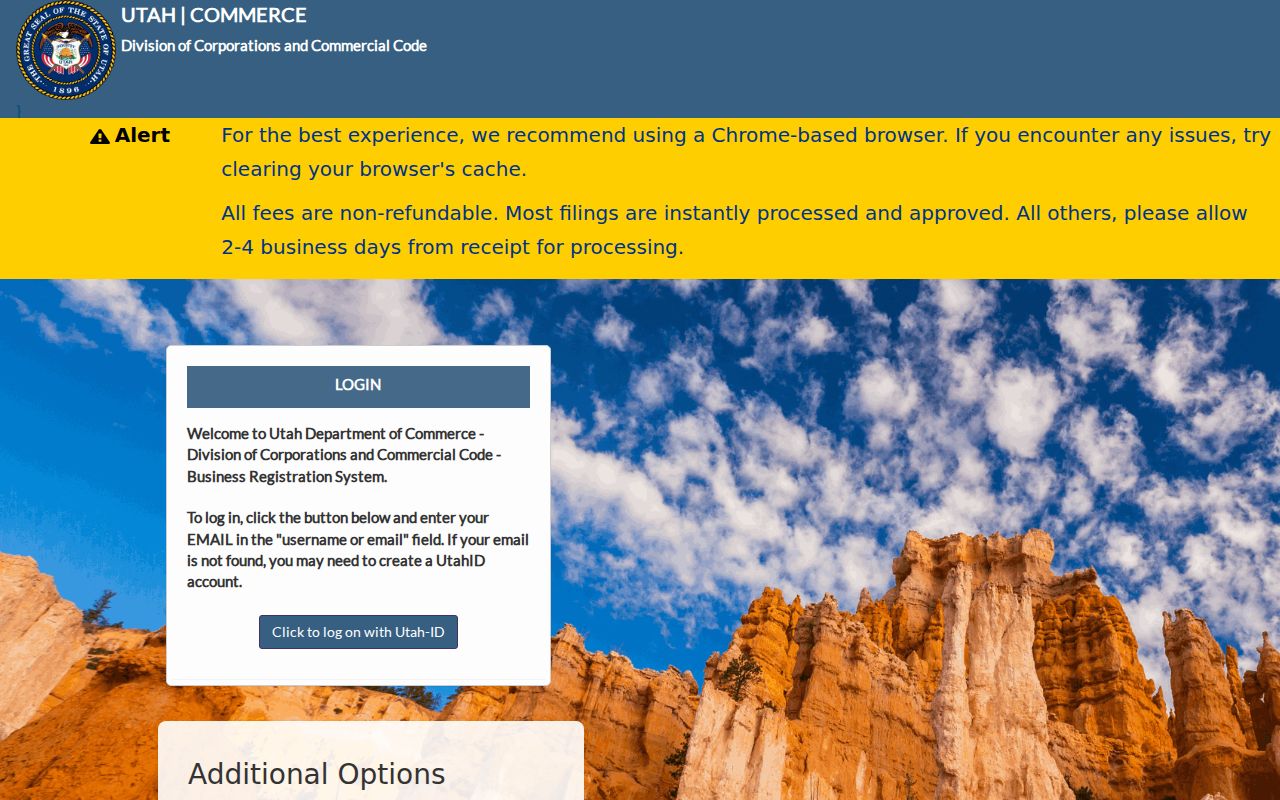
Compare the entity number, formation date, agent, and principal address with a city business-license record or professional credential. Layton has no official browsable city license register in the research, so call Business Licensing at 801-336-3788 or request the existing city record through GRAMA.
Reconnect Through Layton History
A former classmate or long-ago neighbor may appear in sources that were never built as people finders. The Davis County Library lists the Davis County Clipper in its Digital Library, while Utah Digital Newspapers reaches regional titles. Obituaries, wedding notices, school honor rolls, military news, club lists, legal notices, and advertisements can connect a name to relatives and a date. OCR can miss a surname, so try spelling variants and browse the paper near a known event.
The Layton Branch at 155 North Wasatch Drive provides reference help, scanning, copying, and interlibrary loan. County headquarters in Farmington has a microfilm reader. The system does not publish exact holdings years for city directories, reverse directories, telephone books, yearbooks, or obituary indexes, so check the catalog by title and year or call the reference desk before traveling.
Utah Archives' city and county records guide shows the broader local-government route for Layton research.
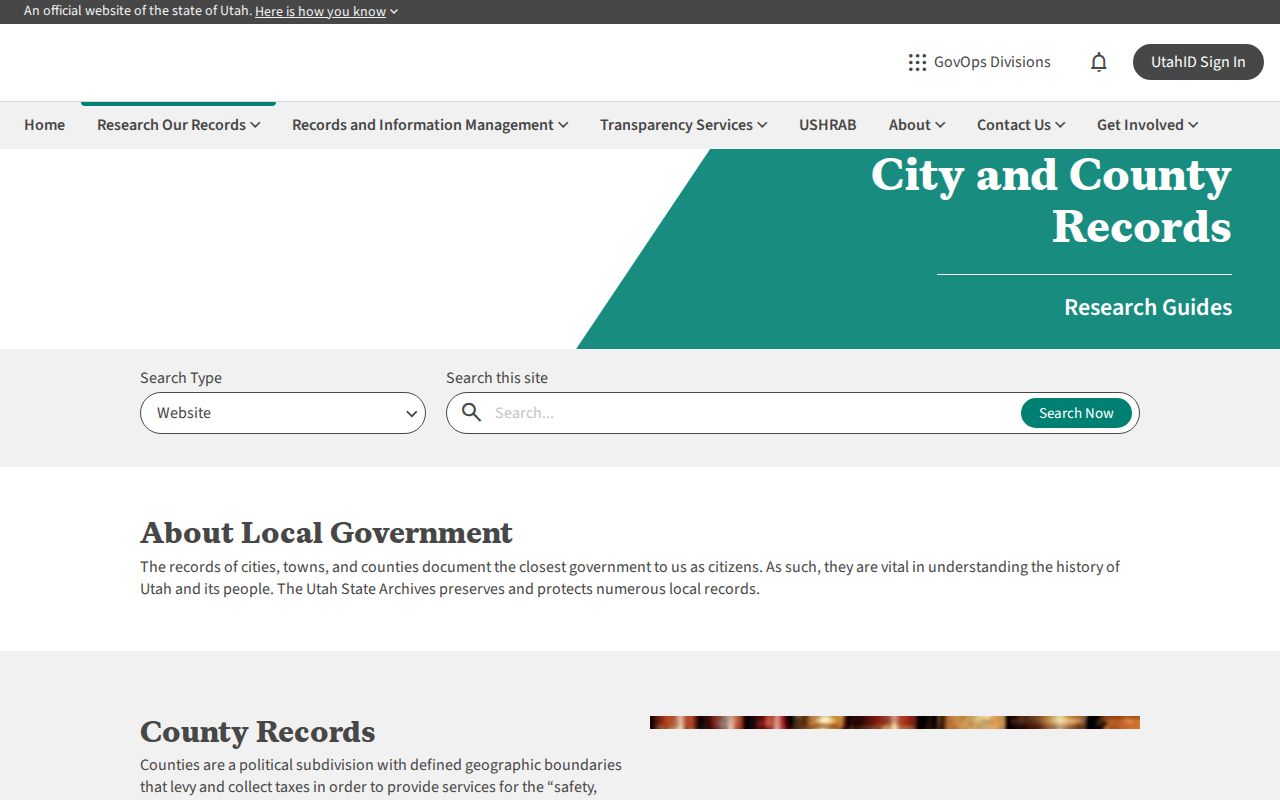
The Archives catalog should be searched by Layton, Davis County, creating agency, record type, and series title. Ruby Price, the first Black teacher in Layton and Utah, is a strong local reminder that school and community collections can reveal people whom a deed-only search misses.
Search Layton Custody Records Safely
The Davis County inmate roster covers current county custody. It lists booking date, first and last name, gender, age, and a details link with charges and bail information. It is not a complete criminal history. The Utah Department of Corrections locator covers state custody or supervision, while the federal Bureau of Prisons locator covers federal custody. Court records should confirm charges and dispositions.
The Davis County Sheriff's official roster includes a current warning about release-payment scams.
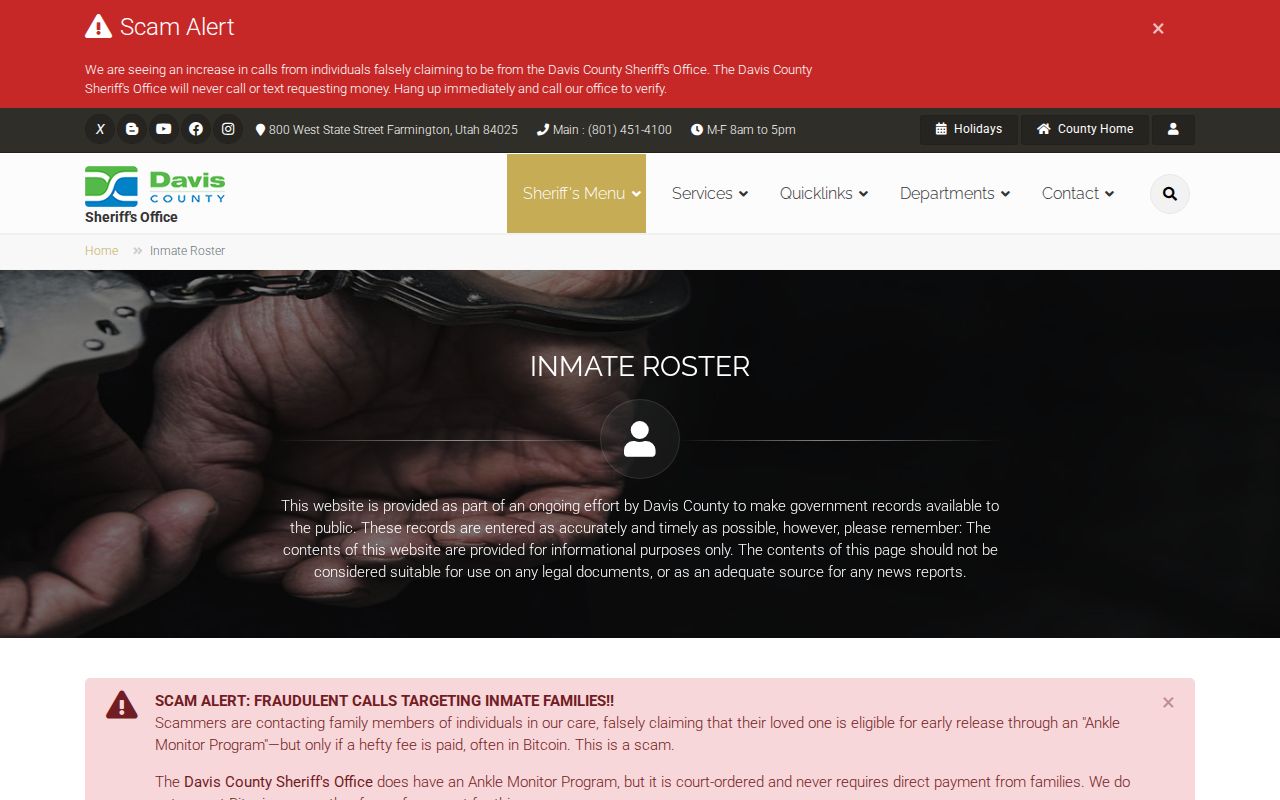
The warning says impostors claim a loved one can enter an ankle-monitor program after a large payment, often in Bitcoin. The real program is court ordered and does not require direct family payment. The Sheriff also says it does not call or text to demand money. Verify through the published office number before acting.
Lawful use. A roster or the Utah Sex and Kidnap Offender Registry is not a risk score. Utah law forbids using registry information to harass, stalk, or threaten a person or family.
Three Eras of Layton Records
Layton records do not share one digital starting line. Davis County organized in 1850, and the Recorder says its historical book collection begins in 1870. Computerization and microfilming began in 1981. Most district courts reached the CORIS case system by the end of 1998, while justice court conversion dates vary. Public electronic district documents filed since July 1, 2010 may appear in Xchange when their classification allows.
| Period | What changed | Fallback |
|---|---|---|
| 1870 | Recorder's identified historical book collection begins | Books, terminals, staff, mail |
| 1981 | Recorder computerization and microfilming began | Compare digital results with older indexes |
| Late 1998 | Most district court CORIS coverage became complete | Court clerk and Archives for earlier cases |
| 2010 | Public electronic district filings became available in Xchange | Clerk for public paper or older files |
Layton incorporated in 1937. Earlier residents may be indexed under Davis County, a settlement, ward, farm, subdivision, or nearby community rather than the modern city name. An empty web result is therefore a prompt to change the place label and access channel, not proof that no record existed.
Protect Privacy in Layton Searches
Official sources expose only the public part of each record. Utah GRAMA classifies government records as public, private, controlled, or protected. Recent vital certificates require identity and eligibility. Voter files exclude driver-license or ID numbers, Social Security numbers, email, phone, birth-date components, and protected at-risk records. Courts omit sealed, expunged, juvenile, adoption, and civil-commitment matters and restrict many domestic filings.
Commercial compilations can merge different people, retain old addresses, or miss corrections. Treat them as leads only and return to the custodian. A suppression request to a commercial company does not erase an accurate deed, docket, or license record. Utah consumer privacy rights apply only within the statute's scope, while correction or redaction of an official record belongs with the office that holds it.
Take Layton Searches Offline
Some of the best Layton evidence has no open surname box. Recorder terminals and books cover land records that the free address-centered map cannot browse by owner. Court clerks supply public files and copies beyond the web result. Library staff can confirm a directory title or newspaper year. Utah Archives can identify municipal, county, court, and historical series by creator and date.
For a city permit, police report, business license, or code record, call the specific Layton division first and learn the terms it uses. Then send a narrow GRAMA request with the record type, names or address, department, date range, known identifier, and desired format. The Layton Open Records Portal provides the municipal submission route.
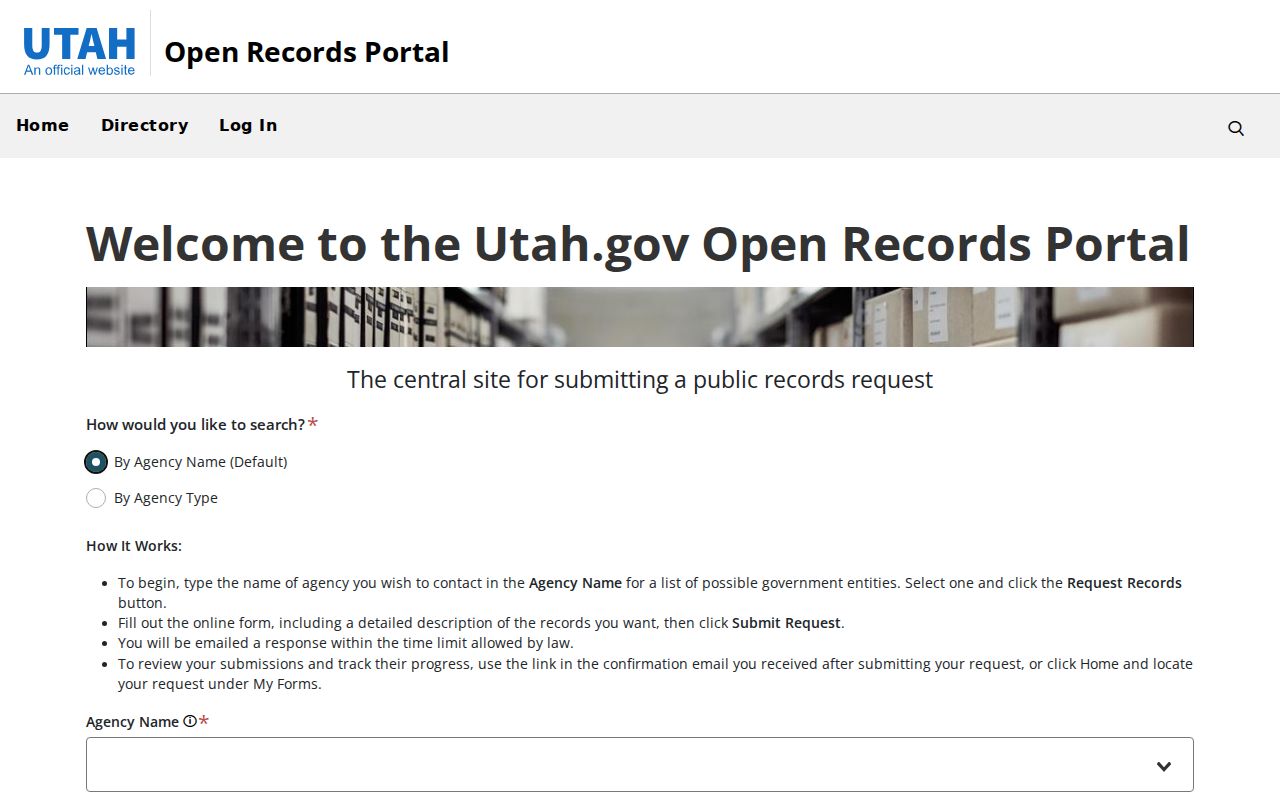
The captured agency page is a request channel, not a general question box. Ask for an existing record. GRAMA does not require Layton City to create a new report or conduct analysis that it does not already maintain.